 |
CRIMSON SHIELD
THE ONLINE MAGAZINE OF BROTHER MARTIN HIGH SCHOOL |
|
November 2011
Published Monthly September through May |
From Drag Racing to the Dome
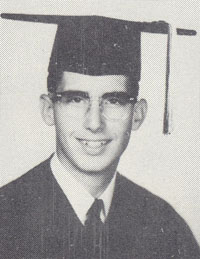
Glenn Menard, Cor Jesu '66 |
Glenn Menard (CJ '66) has enjoyed a career managing sports facilities such as the Texas Motorplex and the Superdome and high profile events like the World Cup, Olympics, and Super Bowl.
- He was captain of the first Cor Jesu basketball team his senior year, while his brother Dale (SA '68) played for St. Aloysius.
- Glenn attended the University of Southwestern Louisiana (now ULL), where he started in Engineering but switched to Business Administration.
- While still in high school, Glenn became "eaten up with drag racing." He helped put himself through college announcing races at various tracks in south Louisiana.
- After graduation, he ran the Southland Drag Stip in Houma. Before long, he got a chance to manage the Irwindale Raceway in Southern California.
- Meanwhile, his brother Cary ('72) inherited Glenn's announcing gigs. (The Menards may be the only set of brothers with a graduate of each of the three Brothers of the Sacred Heart schools in New Orleans.)
In 1974, Glenn returned to Lafayette as Director of the USL Union.
- His duties included events at the Blackham Coliseum, such as concerts by the Commodores and Willie Nelson as well as sporting events.
- He also oversaw the transition of events to the new Cajundome.
|
Then the racetrack beckoned again. Glenn spent 1986-93 as vice president and general manager of the Texas Motorplex in Ennis TX.
- The Motorplex ranks as the first National Hot Rod Association "super track."
- The 29,000 seat facility, the first all-concrete stadium-style drag racing facility, established a higher standard that spawned many other facilities that catapulted the sport to a new level.
Glenn got an offer to be the Venue Manager for 1994 World Cup USA in Dallas.
- He directed a game day staff of 1,500 for the matches at the Cotton Bowl.
- His flirtation with engineering in college came in handy as the stadium had to be changed to accommodate soccer. The first section of grandstands on each side was removed to fit the wider playing field, and the artificial turf was replaced with real turf.
Glenn then moved to the next international sporting event in the U.S., the 1996 Summer Olympic Games in Atlanta.
- He was hired as Venue Manager for the Tennis, Archery, and Cycling cluster near Stone Mountain.
- He directed the building of the 27,500 seat stadium and supervised more than 2,000 staff and volunteers each event day.
After a brief return to his first love, auto racing, Glenn came back to his hometown as Assistant General Manager of the New Orleans Arena.
- At first, he oversaw the minor league hockey games of the New Orleans Brass along with conventions, collegiate basketball games, and 12-16 concerts per year.
- The Arena played a major role in attracting the Hornets from Charlotte. "We had crafted all the contracts so that they were breakable if we got an NHL or NBA team" even though the clients thought it would never happen.
- As a result, the Hornets could enjoy the income streams from the signage, suites, and other sources immediately without waiting years for contracts to end. "Ultimately, that's the only reason we got that team."
- The Hornets' arrival meant the hockey team had to vacate the Arena. "The Brass put up a million dollars to finish the building. We gave them their money back. They went back to the Municipal Auditorium for a year before folding."
In the spring of 2005, Glenn became General Manager of the entire Louisiana Superdome and New Orleans Arena complex. Little did he know the magnitude of the challenge that lay just a few months ahead.
Continued next month ...
|

Glenn Menard |
|