 |
CRIMSON SHIELD THE ONLINE MAGAZINE OF BROTHER MARTIN HIGH SCHOOL |
|
| October 2010 | ||
Even the Teacher Can't Decipher It
Edward Scheidt graduated from Cor Jesu High School in 1957. He received a B.A. from the University of Maryland and an M.S. from George Washington University. Ed spent most of his life working inside the Central Intelligence Agency (CIA) in Langley VA, eventually becoming head of the Cryptographic Center. (Cryptography is the science of encoding and decoding information.)
|
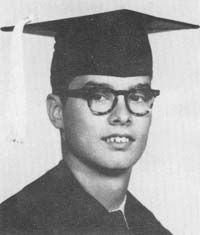 Ed Scheidt (CJ '57) |
 Ed Scheidt |
Sanborn faced one huge problem: he knew next to nothing about cryptography. So the CIA loaned him Ed Scheidt as an advisor. Even though he had retired and started his own consulting business, Ed still served two masters.
Ed met the artist at secret locations to teach him the basic techniques of encoding and decoding messages (substitution, shifting matrices, transposition, etc.). Sanborn applied what he learned in such a way that not even Scheidt would know all the answers. |
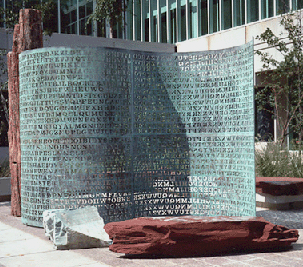
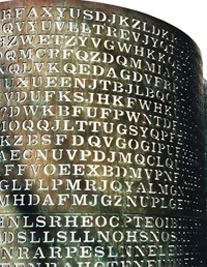
Sanborn divided the sculpture into four sections, each with a self-contained message. After the piece was dedicated in November 1990, the CIA released the enciphered text since the agency's grounds were not open to the public. This immediately created a frenzy of activity among thousands of amateur and professional codebreakers worldwide.
Nearly 20 years after its unveiling, the fourth section of Kryptos, consisting of only 98 characters, remains unbroken. Scheidt and Sanborn are not surprised since they intended the last message to be the toughest. Ed has almost 25 patents on encryption and related subjects. He is the founder of a small company, Tecsec, that implements encryption in various settings. He says, "Kryptos has been fun. It took me back to the math days of Cor Jesu. Although the algorithms that I created for Kryptos were more unique to cryptography, the math principles were fundamentally the same as we heard over 50 years ago." Kryptos has been the subject of numerous articles and a Nova video. |