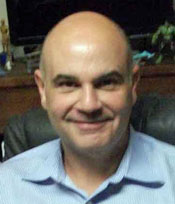
Dr. Carlos Reinoso
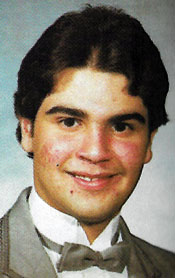
Carlos Reinoso '83
|
"I'm not stupid!"
Dr. Carlos Reinoso ('83), a licensed Psychologist and Clinic Director, was an indifferent student in grammar school.
- There was not a lot of emphasis on academic success at my grammar school. I got by with average grades. I didn't fail anything, but I didn't aspire to a whole lot.
- With no family ties to any high school, he started to go to Brother Martin football games with several friends who planned to become Crusaders.
- As an eighth-grader, he came to the Brother Martin Open House, where he met Brother Jean. I remember feeling welcome. I remember meeting him. The things that stood out were his smile and his laugh. He was so warm. So I applied to Brother Martin. Brother Carl did my interview. I was petrified, like most kids. Years later when he was in the Guidance Department, he began working with me to help students. It's been a really nice experience that brings me back home in a sense.
Because of his weak math background, Carlos was placed in prealgebra as a freshman.
- Before the end of the first quarter, his math teacher, Al Holley, told Carlos that he didn't belong in the class. He pushed me to work really hard. I remember getting my first report card in the mail like it was this day. I opened the report card and saw that I got a 3.14 GPA. I hate to admit it, but my reaction was, "Boy, I'm not stupid!"
- Inspired by his success, he worked hard in all his classes and made the Alpha honor roll from that point on. At the end of my freshman year, I wanted to strive for more. I went to the assistant prin cipal, Greg Brandao, and told him I wanted to be in the Honor Society. He looked at my transcript and said that I couldn't do it because I wasn't on track to get to Advanced Math my senior year. But he saw that I really wanted to do it. He said, "There's only one way. Take Algebra I Honors and Geometry in the same year."
- He did it and earned an invitation to the Honor Society. I felt everybody was on my side. Brother Martin turned me around from this kid who didn't have any direction to somebody who felt like, if he worked hard enough, could achieve anything he wanted.
|
Carlos didn't gravitate to psychology until late in college.
- He started at UNO as a premed major in biology. One of my influences was Mr. Devlin, my biology teacher at Brother Martin. He inspired me to study biology. But along the way, I became disenchanted. I took Psych electives because they were supposed to be easy. But I fell in love with psychology.
- He began to have doubts about entering medical school even after he applied and started preparing for the acceptance test. He talked to the Psychology Department chair who said, It sounds to me your heart's not in biology but in psychology.
- UNO was one of only four universities in the nation at the time that had a division of Applied Developmental Psychology, which studied normative development and how children function with developmental disorders. That spoke to me. I always had a desire to work with children, especially those with learning issues and adjustment issues.
- So at the urging the Psych Chairperson, he applied and was accepted to the UNO graduate school.
- Eight and a half years later - including a delay caused by two of his major professors leaving the school - he had both a Master's and Ph.D. in Psychology.
- Along the way, he ran UNO's training clinc that provided low cost counseling and testing services. That experience gave him the desire to someday start his own clinic.
After earning his doctorate, he started in private practice.
- At first, it was just me. The rent for the office space was $640 a month. I grossed $800 that month. My wife thought we weren't going to make it. But I plugged away, and the practice started to build.
- He wanted to develop a multidisciplinary practice since he had been trained to work with other professions.
- I worked with children with autism, learning difficulties, attention deficit, dyslexia, and family relational issues. My thinking was, We need to create a place where children can get all the services they need. It took me a while to do that.
- Two weeks before Katrina, he purchased a building just off Clearview and West Esplanade where he currently runs his clinic. We had water in the building. It was in really bad shape when I bought it. But with the insurance proceeds, I got a better building out of it.
- The first thing I did was hire teachers, because lots of kids needed tutoring. Then I rented space to a speech therapist and an occupational therapist who worked with children. We've grown from there.
- He now has four psychologists, a social worker, and a play therapist. We've got families covered with wraparound services that can meet their needs at one place.
Carlos began working with Brother Martin's Guidance Department the second year of his private practice.
- Judy Maldonado, his Spanish teacher at Brother Martin, moved into Guidance and started referring students to him.
- It's been rewarding because families will ask if I know anything about the school. I tell them I have personal experience from going there and from my son [Connor '11] and professionally as well. 85- 90% of the kids I see are Catholic school students. But it's nice to be able to work with our Brother Martin families.
- Dr. Reinoso spoke to the entire Brother Martin faculty at an in-service day prior to the start of the 2014-15 school year.
What have been the major changes in his field during his career?
- The greatest change is the advent of neuroscience. Evaluation and assessment have gotten much more detailed and precise about how the brain works. Psychology is not just about how you feel any more. It's how you feel, how you behave, and how brain functions impact both of those. For example, children with ADHD. I started studying that when I was in graduate school. ADHD has been around forever and has been called a lot of other tings. Now, with MRIs and neuroimaging, we know where it happens, where it stems from, which parts of the brain are impacted. We can get more information to parents. Before it was harder to have families buy into conditions their children had. Now we can educate them on it.
- When I was in graduate school, we had only paper and pencil methods to assess attention function. Now technology gets you a clearer assessment of cognitive attention. We also have computer-based interventions. A program I use targets their working memory. Students log onto a website and do exercises that tap into visual and auditory working memory.
- These interventions empower families to make changes. They have alternatives to medications.
- We've moved into the cutting edge of neuroscience, what we call the neuroplasticity of the brain - how to rewire parts of the brain to get better functions. We know so much more about the conditions we're dealing with.
- When I started in graduate school, I told parents that their child has trouble paying attention. Now I'm telling them he has issues with visual arousal, visual impulsivity, sustained attention, or divided attention. It's gotten more complicated because we have to look at so many more factors than we used to.
- We did two hours of testing years ago. Now it's two days. It's a challenge to take all the data and condense it in such a way that families can understand what it is and how they can address it. We provide a road map to either manage or ameliorate an issue.
Have the surrounding systems - laws, government agencies, insurance - kept up and adapted?
- No. I wish we were there. Insurance's goal is different from our goal. They're concerned with the bottom line. For example, evaluations. You'd think it would be natural for insurance companies to cover those. But oftentimes they'll turn down families for evaluations. They want us to get a history on the child and diagnose based on that alone. But if I can't get into what is happening with the child with an assessment, I'm guessing.
- The projection for a child with attention deficit or dyslexia who is undiagnosed is that by adolescense theyhave a higher incidence of drug abuse, alcohol abuse, dropout rate, and more involvement with the law. Children who have a condition that impacts their learning hit a wall. Their self-esteem drops and they're more likely to get involved with the wrong crowd. But if we can identify the problem early, they'll have a better outcome.
- Managed care sees long term, not short term. But government agencies are set up for treatment after the fact. The mental health system doesn't do a good job of catching issues before they develop into bigger problems. We see less and less money put into prevention. Everything is on the back end. We don't have long term facilities in Louisiana for people with severe mental illness. They've all been shut down and privatized. But private companies don't do long term services. They do short term and move you out. A lot of people don't get the preventive services they need because there's no system in place to meet their needs. They're out on the street, not being addressed or being addressed only when they become a problem.
|
Has Obamacare made a difference?
- In my opinion, it hasn't up to this point. It's too early to know.
- Some provisions in theory should help, but logistic issues might keep it from taking place. For example, mental health coverage is mandated. But people getting mental health care face much higher premiums. They don't get services because they must pay out of pocket because the deductible is so high. Multiple visits are required, but they can't afford to utilize it.
What changes have occurred in the use of medications?
- There's been lots of progress. They've developed extended release versions of those medicines that will get kids through an entire school day.
- But the side effects haven't changed. The biggest side effect is appetite suppression. The student doesn't eat breakfast or lunch and may not even be hungry at dinner time. So they lose weight. Newer medicines have minimized the side effects but they're still a problem.
- There are newer medicines that are not stimulus based and do not have an effect on appetite, but they're not as effective in addressing problems that stimulants do.
- There are way too many kids on medications. Too many children are being prescribed these medications as a first option rather than a last option. We look for the quick fix. We have an ADD nation because we need immediate gratification. The quickest solution seems to be put him on medication. I tell parents this is one of the recommendations out of six or seven. Consider academic help outside of school. Consider family counseling or computer intervention.
- Lots of kids have attention issues but might also be suffering from depression or anxiety. That means addressing factors within the family. Family counseling takes work.
- For example, after Katrina I received phone calls left and right. "My child can't concentrate." I would ask families, "Are you displaced from your home? Was he having these issues last school year?" No? Then there are other factors at play. I helped them understand the situation they were in. If displaced families can get back home or to a home-like setting, you'll see the issues go away.
- There's always other factors that can play a role - divorce, a death or illness in the family, a disaster, breakup with a girlfriend, experimenting with drugs.
How has the use of illegal drugs changed?
- My biggest concern is that attitudes, particularly about marijuana, have changed tremendously. Kids have always experimented with marijuana. But the national mind set now is reflected in the movement to legalize marijuana throughout the country.
- There's a lot of misinformation. It's all about feeling good, relaxing, with no negative consequences. When you look at the research, there is cannabis dependence, which is a psychological dependence.
- There are two main issues. First, neurological studies clearly show there is a negative impact on cognitive functioning. In essence, kids' IQs drop when they use marijuana. Secondly, marijuana is a gateway drug. People who are for legalization will tell you it's not, but studies are very clear. There are very few people who get addicted to heroin or cocaine who were not chronically using marijuana first. If you never go to a dealer to get marijuana, you will likely not come across a dealer trying to sell you heroin or cocaine.
- The thing that concerns me most is that the marijuana of the 60s and 70s is not what kids are using today. They're using synthetic marijuana or marijuana laced with synthetic chemicals that give you the sensations you're looking for. But these chemicals will impact each patient's brain differently. Talk to ER doctors, and they'll tell you there's an incredible rise in teenagers and college students admitted for heightened anxiety, feeling like they're having heart attacks or psychotic symptoms. These children and young adults don't know what's being given to them. They may have used marijuana 50 times without a problem. This one time there's something in it. The impact can be devastating. Teenagers and young adults have experienced seizures or gone into cardiac arrest. Also, the chemicals put in there have higher addiction potential.
- I'm not a substance abuse specialist, but I try to convince them of the dangers. I get a phone call at least once a month. "I had to pick him up from college. He's paranoid, pacing, can't sleep, hallucinating." He has to be hospitalized. It takes at least a week to ten days to detox from one trip they took with a synthetic chemical in it.
- Marijuana use is rising among teenagers because the national mood is that it's OK. Heroin use is also back on the rise.
Dr. Reinoso wrote a children's book that had a much wider impact than he imagined.
- He and his family evacuated Destin FL to escape Katrina. When he came home a week later to check their house, he also checked the phone messages at his office, which was also damaged.
- Parents were asking for help in talking to their children about what had happened.
- When he returned to Florida, he talked to his wife. I wasn't in a position where I could see patients. I was feeling useless. I know we have to meet our needs here. There's no way to see the families who are asking for help.
- During the night, he woke up with an idea. This duck popped into my mind. I can only say I was inspired by the Lord. I sat at the computer and just typed. It was like the words were just coming out.
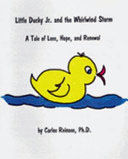
- The result was Little Ducky Jr. and the Whirlwind Storm: A Tale of Loss, Hope, and Renewal. It is the story of a little duck whose family had to evacuate their pond during a storm. They came back to find destruction all around them. He wrote about how the duck questioned himself, the future, and his family's ability to get by. But through faith and family, they survived.
- I found a printer who was open in Harahan. I printed 10-12 copies and brought them to different counselors I knew and a couple of pediatricians. "Here, if this helps any of your families, use it."
- He soon got a call from the Director of Pediatrics at Oschner. He wanted to give the book out. He also got calls from schools that had reopened. They wanted to offer the book to their families. Eventually, 12-14,000 copies were distributed.
- Carlos gave talks to PTAs, school co-ops, and other groups. He told parents it was understandable they were caught up in getting their families back in their home. But they needed to spend time with their children, talk to them, be a parent, not just a provider trying to fix the home. So many famliies told me, "You're right. we're not doing anything as a family. The kids are feeling it."
- I still have people come up to me in a store. "You wrote that book." They tell me their story. I'm not an author by trade, but it gave me a sense of purpose at a time when I couldn't do my actual work. It was therapy for me, too. Certainly there was suffering. But I think that terrible situation helped bring out the best in people.
Top of Page
|
|